Logistics Weekly
- Flag Iran-flag shipping and P&I renewals for legal review before 8 September.
- Hormuz / Red Sea energy shock — Watch bunker and fuel pass-through to regional logistics; flag the price-hedge implication. why
- Malacca / Singapore Strait disruption — Escalate to a Bowtie deep-dive; check alternate-routing and bunker/traffic impact on the SG hub. why
- Panama Canal / alt-route disruption — Check draft/transit restrictions and rerouting impact on Asia-Americas / Asia-Europe lanes and freight costs. why
Where the pressure is this week
The front door to this issue. What Singapore depends on, which of those moved unusually this week, and where to read the story. Everything here is counted from what the scanners captured; nothing on this tab is written.
Dependency map
Bar length is “unusual for this dependency”, not “how many items mentioned it”. Each is compared only against its own last 5 weeks, so the volume of coverage a place normally attracts cancels out. Every dependency is drawn every week, including the quiet ones. Nothing is hidden behind a hover: pointing at a marker writes its one line into the strip under the map, tapping does the same on a phone, and the same lines are written out below.
Each is measured against its own ordinary week, not against the others. Figures are approximate on purpose.
- Chinaat its normal week
The Iran War Has Turned VLCCs Into $650,000-a-Day Assets OilPrice
watched dependency→ read it in Around the region - Suez Canalat its normal week
Container shipping tipped to normalise through Red Sea by year-end Splash247
moderate dependency→ read it in Around the region - Panama Canalat its normal week
Panama Canal Congestion Drives Gas Tankers To Unusual Routes gCaptain
moderate dependency→ read it in Around the region - Aviation & air-cargo hubat its normal week
Air cargo demand dips, as expected, but rates show more resilience The Loadstar
watched dependency→ read it in Supply chain - Indonesiaat its normal week
Al Jazeera reporter witnesses wildfire smoke toll on kids inside Indonesia Al Jazeera
watched dependency→ read it in Around the region - Strait of Hormuzat its normal week
The Iran War Has Turned VLCCs Into $650,000-a-Day Assets OilPrice
high dependency→ read it in Around the region
These bands are provisional. They are measured against 5 weeks of each dependency's own history rather than the eight the method asks for, because the archive does not reach back further yet. A short record moves more than a long one, so treat a single week's band as weaker evidence than it will be in October.
Below the reporting floor this week: Transhipment hub, Fertiliser, Construction, Water, Strait of Malacca, Semiconductors, Wealth & treasury centre, Secondary-sanctions exposure. Each moved, but its ordinary week is under three items, so a ratio would be noise rather than signal.
Nothing filed at all: South China Sea, Ship registry / flag state, Bunkering hub, USD clearing / trade finance, Lombok / Sunda, Arbitration & dispute resolution, Marine insurance / P&I. The sources were read; these stay drawn and dimmed, never removed.
Every week we write down what we think happens next and the date we will know by. When that date arrives we mark ourselves against what happened, right or wrong, and publish the answer.
- RIGHTsaid 2026-08-09 · due 31 Aug
We saidDRC Ebola case count exceeds 5,000 or WHO declares Public Health Emergency of International Concern (PHEIC)
What happenedAl Jazeera reported on 18 Aug 2026 that DR Congo's Ebola infections passed 5,000 and WHO declared it a 'global emergency', satisfying both prongs of the condition by 31 Aug. · Al Jazeera
- PARTLYsaid 2026-08-09 · due 15 Aug
We saidHouthi attack frequency on merchant traffic in Red Sea/Bab-el-Mandeb exceeds two incidents per week, or Singapore-flagged vessel struck
What happenedMultiple Houthi attacks on merchant vessels in Red Sea/Bab-el-Mandeb occurred by 15 Aug (Indian vessel sunk, Turkish roro struck, bulker struck in Hormuz, Saudi tanker attacks claimed), but captured items do not specify attack frequency met
- PARTLYsaid 2026-08-09 · due 10 Aug
We saidIran-Oman Hormuz joint statement published with defined transit corridors and neutral-flagged vessel protocols, and first commercial vessel passage confirmed
What happenedIran and Oman agreed on a Hormuz route by 05 Aug with defined corridors announced, but no evidence of a joint statement with neutral-flagged vessel protocols or confirmed first commercial passage by 10 Aug.
- WRONGsaid 2026-08-15 · due 15 Aug
We saidif Iran-Oman publish a formal joint statement with defined transit corridors and the US or Oman publicly confirm, and vessel count through Hormuz rises above 30 per day for three consecutive days
What happenedBy 15 Aug, no formal joint statement with defined transit corridors was published, vessel traffic was dwindling rather than rising above 30 per day, and Iran explicitly warned any deal would not open the strait.
- WRONGsaid 2026-08-15 · due 31 Aug
We saidif Samsung, Micron or SK Hynix announce capacity expansion for standard DRAM/NAND (not HBM) or US/China trade measures prioritise non-AI memory
What happenedNo captured items contain announcements of capacity expansion for standard DRAM/NAND by Samsung, Micron, or SK Hynix, nor do they show US/China trade measures prioritizing non-AI memory; the only memory-related item discusses China's AI dat · Malay Mail
- PARTLYsaid 2026-08-15 · due 12 Aug
We saidIran and Oman publish a joint statement with defined transit corridors and the US or Oman publicly confirm participation
What happenedIran and Oman agreed on a new Hormuz route by 05 Aug, but no joint formal statement with defined transit corridors was published, and US public confirmation of participation did not occur—only US statements about talks being close. · BBC
- PARTLYsaid 2026-08-15 · due 18 Aug
We saidTrump formally declares Hormuz US territory or Iran conducts another vessel strike
What happenedTrump said he would 'soon' declare Hormuz US territory (not a formal declaration by 18 Aug) and Iran/proxies conducted vessel strikes (ADNOC hits, bulker attack on 18 Aug), satisfying one prong but not a formal Hormuz declaration.
- PARTLYsaid 2026-08-15 · due 22 Aug
We saidUS Commerce or Customs announces Singapore-specific transshipment audit or enforcement action
What happenedUS flagged Singapore in transshipment concerns (14 Aug), but no specific audit or enforcement action by US Commerce or Customs was announced by 22 Aug. · The Business Times
- PARTLYsaid 2026-08-22 · due 24 Aug
We saidIran-US escalation persists (no diplomatic contact announced) and UAE-Iran trade severance holds, and UKMTO shipping advisories show convoy formations or transit delays in Hormuz
What happenedIran-US escalation persisted with no diplomatic contact (confirmed by Trump statement on 18 Aug and gCaptain on 26 Aug) and UAE-Iran trade severance held (confirmed 19-21 Aug), but UKMTO shipping advisories showing convoy formations or tran
- WRONGsaid 2026-08-22 · due 29 Aug
We saidTurkey or Qatar issues statement on Hormuz mediation or back-channel Iran talks
What happenedThe captured items show Iran-Qatar and Iran-Oman talks on Hormuz, but no statement from Turkey or Qatar as the condition specifically required. · Al Jazeera
- PARTLYsaid 2026-08-30 · due 31 Aug 2026
We saidIndonesia's national disaster agency or Singapore's National Environment Agency publish a haze alert for Singapore or report northwesterly wind patterns over Sumatra and Kalimantan
What happenedIndonesia's BNPB (national disaster agency) issued public health guidance amid wildfires on 25 Aug 2026, and haze crisis warnings were reported, but no explicit haze alert for Singapore or northwesterly wind pattern reports by either agency · Antara
- WRONGsaid 2026-08-30 · due 31 Aug
We saidIndonesia's wildfire suppression deployment is reported by two or more outlets to have failed to stabilise West Kalimantan fire fronts, and either Malaysia or Singapore issues a formal diplomatic protest or activates ASEAN air-quality protocols
What happenedAn Indonesian lawmaker explicitly stated 'No formal protests over Sumatra, Kalimantan fires' as of 22 Aug 2026, and captured items show Indonesia urging neighbours to avoid blame rather than Malaysia or Singapore issuing formal diplomatic p · Antara
- WRONGsaid 2026-08-30 · due 31 Aug
We saidif two or more outlets report that Indonesia's National Disaster Management Agency or Singapore's National Environment Agency has issued a formal haze advisory or health alert covering Singapore
What happenedNo captured items report that Indonesia's BNPB or Singapore's NEA issued formal haze advisories or health alerts covering Singapore by 31 Aug; items show Indonesia's BNPB urged mask-wearing and deployed firefighting resources, but no formal · Antara
- WRONGsaid 2026-08-30 · due 31 Aug
We saidIndonesia's National Agency for Disaster Countermeasure or Ministry of Environment and Forestry reports containment of West Kalimantan fire fronts or a formal ASEAN air-quality protocol activation
What happenedNo captured items report containment of West Kalimantan fire fronts or formal ASEAN air-quality protocol activation by 31 Aug; instead items show ongoing firefighting efforts and crisis conditions through 29 Aug. · Antara
Still open
- by 31 Aug Saudi Arabia's Abqaiq refinery remains offline beyond the original mid-August return-to-service guidance
- by 31 Aug Indonesia NTT earthquake five-day medicine supply window expires (22–25 Aug) and pharmaceutical logistics stall
- by 31 August Northwesterly wind prevails over Sumatra and Kalimantan; NEA PSI index crosses 100 (unhealthy threshold)
- by 31 Aug Singapore's National Environment Agency reports a 24-hour PSI reading above 100 (unhealthy range)Restates the call above in different words. One condition per call is the rule; this pair is a miss.
- by 31 Aug Indonesia's National Environment Agency reports that northwesterly wind patterns over Sumatra and Kalimantan have shifted haze toward Singapore
- by 31 Aug NASA FIRMS data shows more than 15,000 active-fire hotspots over Sumatra and Kalimantan
Singapore & Regional Brief
A weekly snapshot of Singapore, regional and global developments worth knowing.
- Myanmar's Russian-backed Dawei megaport revival, explicitly positioned as a Malacca Strait bypass, poses a direct structural threat to Singapore's transhipment and bunkering centrality.
- Indonesia's wildfire crisis has escalated to 3 million exposed across seven provinces, with West Kalimantan schools closed and haze forecast to reach Singapore within 48–72 hours.
- US-China friction over Singapore's transhipment model intensified this week: a US white paper accused 40+ countries of tariff evasion via 'shadow transhipment', Singapore's PM rejected the claim, and US authorities opened an investigation into Singapore-based Apex Logistics over suspected Nvidia chip smuggling.
- Strait of Hormuz remains paralysed six months into closure, but Iran-Oman negotiations this week advanced a 30–60 day temporary corridor framework; Brent crude fell 9 per cent to USD 85 yet VLCC rates to Asia hit record USD 647,000 per day as Saudi Arabia bypasses the strait via ship-to-ship transfers.
- Myanmar revived the Dawei megaport project this week with Russian backing and explicit positioning as an Indian Ocean gateway bypassing the Strait of Malacca, according to a 26 August Channel NewsAsia report. Financing and timeline remain uncertain, but the announcement signals renewed geopolitical will behind a long-dormant initiative that, if completed, would directly erode Singapore's chokepoint advantage and transhipment hub centrality.
- Direct US regulatory pressure on Singapore's transhipment and technology re-export functions escalated sharply. A 24 August US white paper accused more than 40 countries, naming Singapore, of helping China evade tariffs via 'shadow transhipment'; Singapore PM Lawrence Wong rejected the claim as unrealistic the following day. By 27–28 August US authorities had opened an investigation into Singapore-based Apex Logistics, a Kuehne+Nagel subsidiary, over suspected involvement in smuggling Nvidia AI chips to China, with timing coinciding with the firm's IPO planning.
- Indonesia's wildfire crisis intensified to a regional air-quality threat. By 28 August, 3 million people across seven provinces were exposed to hazardous PM2.5 levels; West Kalimantan schools closed and clinics reported infants struggling to breathe in what authorities described as the worst conditions in 15 years. Haze was forecast to reach Singapore within 48–72 hours.
- Strait of Hormuz corridor negotiations moved from intent to interim framework this week. Iran and Oman advanced a 30–60 day temporary route, seven Iraqi tankers loaded crude simultaneously, and Brent crude fell 9 per cent week-on-week to USD 85. Yet VLCC rates to Asia hit record USD 647,000 per day—ten times the prior-year level—as Saudi Arabia executed a second consecutive week of ship-to-ship crude transfers via Oman and UAE ports, signalling persistent closure risk and sustained bunker cost pressure for Singapore.
- A catastrophic Nepal-Tibet glacial flood killed at least 586 and left more than 2,400 missing, including Singaporeans, after ice and rock collapse at the Gyirong border crossing. China's state media suppressed CCTV footage and delayed casualty data, exposing Belt and Road infrastructure vulnerability and creating a planning blind spot for regional logistics operators reliant on Himalayan crossings.
Singapore
NotableUS investigation into Singapore-based logistics firm over chip smuggling raises export-control compliance risk
US authorities opened an investigation into Apex Logistics, a Singapore-based subsidiary of Kuehne+Nagel, over suspected involvement in smuggling Nvidia AI chips to China, according to a 27–28 August report by The Loadstar. The timing coincides with Apex's IPO planning. On 28 August Singapore Deputy PM and Trade Minister Gan Kim Yong stated Singapore will not permit logistics hubs to obscure Chinese origin for US tariff evasion, following a 24 August US white paper that accused more than 40 countries, naming Singapore, of 'shadow transhipment'. PM Lawrence Wong rejected the claim as unrealistic on 25 August. The investigation signals heightened US export-control scrutiny on semiconductor and dual-use goods re-export flows through Singapore, raising compliance risk for logistics operators handling controlled items.
Sources The Loadstar
Indonesia wildfire haze forecast to reach Singapore within 48–72 hours
Indonesia's wildfire crisis escalated to 3 million people exposed across seven provinces by 28 August, with West Kalimantan schools closed and clinics overwhelmed by infants struggling to breathe in what officials described as the worst conditions in 15 years, Al Jazeera reported. Haze was forecast to reach Singapore within 48–72 hours. NASA FIRMS data on 29 August recorded 14,030 active-fire hotspots over Sumatra and Kalimantan in the preceding 48 hours, 1.9 times baseline. Singapore's port operations, aviation scheduling and cross-border supply movement face disruption risk; air-quality monitoring and contingency planning are required.
Sources Al Jazeera · Antara
Singapore MFA deploys crisis team for citizens missing in Nepal-Tibet flood
Singapore's Ministry of Foreign Affairs deployed a crisis response team after Singaporeans were reported among more than 2,400 people missing following a catastrophic flash flood in Nepal and Tibet, according to 27–29 August reports. At least 586 people died after glacial ice and rock collapse triggered flooding at the Gyirong border crossing. China's state media suppressed CCTV footage and delayed casualty data, the BBC and Taipei Times reported, creating an information blind spot. The Shigatse smart port, a multibillion-yuan Belt and Road gateway designed to handle 300 trucks per day by 2030, is under climate-resilience scrutiny. The Nepal-China border crossing remains unreliable for days or weeks, disrupting regional trade routes.
Sources Channel NewsAsia · BBC · South China Morning Post · Mothership
Ningbo-Zhoushan overtakes Singapore as world's second-busiest container port
China's Ningbo-Zhoushan port displaced Singapore as the world's second-busiest container port by volume, according to a 26 August report by Maritime Executive and The Loadstar. The shift reflects Hormuz crisis redirection and consolidation onto China routes. Jebel Ali dropped out of the top 30 after 20 years. The ranking erosion depends on corridor stability and normalisation timelines; if Red Sea routing normalises by year-end as some analysts project, release of tonnage from Africa loops may shift transhipment share toward direct Suez routing for Asia-Europe, pressuring Singapore hub volumes.
Sources Maritime Executive · The Loadstar
Southeast Asia
NotableMyanmar revives Russian-backed Dawei megaport as Malacca Strait bypass
Myanmar's Dawei Special Economic Zone megaport project, stalled for years, has been revived with Russian backing and renewed Thai interest, explicitly positioned as an Indian Ocean gateway bypassing the Strait of Malacca, Channel NewsAsia reported on 26 August. Financing and timeline remain opaque, and viability doubts persist due to Myanmar's civil conflict and political instability. If the project succeeds, it poses a direct structural threat to Singapore's transhipment dominance, bunkering revenue and chokepoint leverage. The announcement signals geopolitical intent behind a long-term risk vector.
Sources Channel NewsAsia
Global (Others)
NotableIran-Oman advance 30–60 day Hormuz corridor framework; Brent falls but VLCC rates hit record
Iran and Oman advanced a 30–60 day temporary maritime corridor framework this week, with Iranian officials confirming the agreement on 26–27 August, according to gCaptain, Maritime Executive and Al Jazeera. Seven Iraqi tankers loaded crude simultaneously on 26 August, the first material flow recovery signal. Brent crude fell 9 per cent week-on-week to USD 85, yet VLCC rates to Asia surged to a record USD 647,000 per day—ten times the prior-year level—as Saudi Arabia executed a second consecutive week of ship-to-ship crude transfers via Oman and UAE ports, bypassing Hormuz closure risk. The strait remains at one-quarter normal throughput six months into the Iran-US-Israel conflict. Singapore's bunkering costs, fuel hedges and transhipment volumes face sustained volatility until throughput normalises.
Sources gCaptain · Maritime Executive · Al Jazeera · OilPrice
US-Canada trade war escalates with reciprocal tariffs up to 50 per cent
The United States announced 50 per cent tariffs on Canadian cars, trucks and steel from 1 January 2027, and Canada retaliated with dollar-for-dollar tariffs on up to USD 20 billion of US goods effective 8 September, according to BBC and Deutsche Welle reports on 24–25 August. The escalation follows the collapse of bilateral trade talks. Supply-chain and currency disruption are already in play; ASEAN auto and commodity sectors face re-export and intermediary exposure, particularly Thai and Vietnamese automotive assembly and Canadian lumber to ASEAN construction markets.
Sources BBC · Deutsche Welle
China deploys record number of vessels near Taiwan
China deployed a record number of vessels near Taiwan on 28 August, the Taipei Times reported, signalling sustained pressure and elevated Taiwan Strait risk. The deployment follows a week of heightened US-China friction over sanctions, trade and technology controls. Regional shipping and aviation routes face continued exposure to sudden closure or rerouting risk.
Sources Taipei Times
- By 31 Aug if Singapore's National Environment Agency publishes a PSI reading above 100 for three consecutive hours — Indonesia wildfire haze has reached Singapore; port visibility, aviation scheduling and cross-border supply movements face operational disruption
- By 5 Sep if two or more outlets report that the Iran-Oman Hormuz corridor has opened and commercial vessels have transited without detention — crude flow restoration accelerates and Singapore bunker pricing stabilises; if no such report appears, closure premium persists into Q4
- By 8 Sep if Canada implements its announced retaliatory tariffs on USD 20 billion of US goods — North American supply-chain fragmentation is confirmed; ASEAN re-export and intermediary sectors, particularly Thai and Vietnamese automotive and Canadian lumber to ASEAN construction, face margin and routing pressure
Supply-Chain & Resilience Brief
- Strait of Hormuz throughput remains at one-quarter normal flow six months into closure, but Iran-Oman corridor negotiations this week advanced a 30–60 day framework and Brent crude fell 9 per cent to USD 85; yet VLCC rates to Asia hit record USD 647,000 per day as Saudi Arabia bypasses the strait via ship-to-ship transfers.
- MSC restored Suez Canal transits on four major east-west services this week, signalling possible Red Sea normalisation by year-end; if realised, release of tonnage from Africa loops will compress box rates and shift transhipment share toward direct routing.
- Global port congestion hit a record 4.3 million TEU stranded as East Asia typhoons compounded backlogs; intra-Asia container rates surged 6 per cent week-on-week to USD 1,091 per 40ft.
- Qatar extended LNG force majeure through November, pushing Asian spot prices to USD 23.39 per MMBtu—a four-year high—and leaving Singapore bunkering and regional fuel costs structurally elevated into Q4.
US investigation into Singapore-based Apex Logistics over chip smuggling raises export-control compliance risk for controlled-goods handlers
Singapore logistics operators handling dual-use goods face heightened US scrutiny and secondary-sanction risk; compliance and legal review required for semiconductor and technology re-export flows.
Read on
What happened
- US authorities opened an investigation into Apex Logistics, a Singapore-based subsidiary of Kuehne+Nagel, over suspected involvement in smuggling Nvidia AI chips to China, according to a 27–28 August report by The Loadstar.
- The timing coincides with Apex's IPO planning. On 28 August Singapore Deputy PM and Trade Minister Gan Kim Yong stated Singapore will not permit logistics hubs to obscure Chinese origin for US tariff evasion, following a 24 August US white paper that accused more than 40 countries, naming Singapore, of 'shadow transhipment'.
- PM Lawrence Wong rejected the claim as unrealistic on 25 August.
So what for us
- The investigation signals heightened US export-control scrutiny on semiconductor and dual-use goods re-export flows through Singapore.
- Compliance risk increases for logistics operators engaged in controlled-goods handling; reputational and operational impact on Singapore's transhipment model if US entity-list actions or secondary sanctions target Singapore shipping, finance or freight-forwarding firms.
- Any US enforcement action against Singapore operators would create severe dollar-clearing and trade-finance disruption.
How confident
- Actor named by source: US authorities, Apex Logistics, Kuehne+Nagel, Singapore government officials.
- Cause stated by source: suspected involvement in chip smuggling; timing coinciding with IPO.
- Figure current: investigation opened this week. Scope national: Singapore-based firm.
- Single-source: The Loadstar only; corroboration absent. Confidence moderate given single-source status but government statements on record.
Sources The Loadstar
Iran-Oman advance 30–60 day Hormuz corridor framework; Brent falls but VLCC rates hit record, bunker costs remain elevated
Singapore bunkering volumes, fuel pass-through costs and marine insurance premiums exposed to sustained high-margin tanker traffic and routing delays until Hormuz flow normalises.
Read on
What happened
- Iran and Oman advanced a 30–60 day temporary maritime corridor framework on 26–27 August, with Iranian officials confirming the agreement.
- Seven Iraqi tankers loaded crude simultaneously on 26 August, the first material flow recovery signal.
- Brent crude fell 9 per cent week-on-week to USD 85. Yet VLCC rates to Asia surged to a record USD 647,000 per day—ten times the prior-year level—as Saudi Arabia executed a second consecutive week of ship-to-ship crude transfers via Oman and UAE ports.
- The strait remains at one-quarter normal throughput six months into the Iran-US-Israel conflict.
So what for us
- Singapore bunkering volumes, fuel pass-through costs and marine insurance premiums remain exposed to sustained high-margin tanker traffic and routing delays.
- Ship-registry, transhipment and bunker-hedge positions face upside volatility in IFO 380 and MGO pricing.
- Container and breakbulk fuel surcharges stay elevated. Diplomatic progress compresses crude risk premium but physical supply-chain costs persist until throughput normalises; if corridor fails or secondary attack occurs, insurance premiums spike and Cape of Good Hope rerouting extends transit times by 10–14 days, locking in elevated fuel costs through Q4.
How confident
- Actor named by source: Iran, Oman, Saudi Arabia, Iraqi shippers.
- Cause stated by source: corridor negotiation framework agreed.
- Figure current: seven tankers loading on 26 August; VLCC rates USD 647,000 per day this week; Brent USD 85 at week's end.
- Scope national and regional: Hormuz throughput, Gulf-Asia tanker rates, Saudi bypass routing.
- Corroborated: gCaptain, Maritime Executive, Al Jazeera, OilPrice. Confidence high.
Sources gCaptain · Maritime Executive · Al Jazeera · OilPrice
MSC restores Suez transits on four major services; Red Sea normalisation by year-end could shift transhipment share toward direct routing
Release of tonnage from Africa loops will suppress box rates and shift transhipment share; Singapore hub volumes face pressure if carriers choose direct Suez routing over intra-Asia feeder splitting.
Read on
What happened
- MSC scheduled four major east-west container services (20,300–23,782 TEU) for Suez Canal transits on 25–26 August, according to The Loadstar and Maritime Executive.
- Analyst Lars Jensen argued normalisation is 'increasingly plausible' by end-2026.
- A 26 August Splash247 report (single-source) suggested container shipping could normalise through the Red Sea by year-end.
- Houthi strikes persist; a Saudi VLCC was hit 63 nautical miles west of Yanbu on 24–25 August, 1,000 km north of main operating areas, according to Splash247 (single-source, unconfirmed).
So what for us
- If Red Sea normalises by year-end, release of tonnage from Africa loops will suppress box rates and shift transhipment share toward direct Suez routing for Asia-Europe.
- Singapore hub benefits from diversified gateway access but faces volume pressure if carriers choose direct routing over intra-Asia feeder splitting.
- Ningbo-Zhoushan overtaking Singapore as world's second-busiest container port (26 August) reflects structural shift during crisis; Singapore's ranking erosion depends on corridor stability and normalisation timeline.
How confident
- Actor named by source: MSC, analyst Lars Jensen. Cause stated by source: Suez transit scheduling decisions by carrier.
- Figure current: four services scheduled this week. Scope national and regional: east-west liner services, Red Sea routing, Singapore transhipment volumes.
- Corroborated: The Loadstar, Maritime Executive on MSC scheduling; Splash247 single-source on normalisation timeline and Houthi strike.
- Confidence moderate; normalisation timeline speculative, strike unconfirmed.
Sources The Loadstar · Maritime Executive · Splash247
Global port congestion hits record 4.3 million TEU stranded; intra-Asia rates surge 6 per cent week-on-week to USD 1,091 per 40ft
PSA terminals face elevated dwell times and schedule pressure; container lease rates and chassis availability tighten; export competitiveness for time-sensitive cargo at risk.
Read on
What happened
- Global port congestion reached a record 4.3 million TEU stranded on 26 August as East Asia typhoons (Bavi, Noul, Dolphin, Narra, incoming Saudel) compounded backlogs, The Loadstar reported.
- North Asian ports account for half of global delays. Intra-Asia container rates surged 6 per cent week-on-week to USD 1,091 per 40ft on 27 August as Middle East unrest and China typhoons tightened capacity.
- Black Sea grain disruption (Russian and Ukrainian exports down 80 per cent in August; Sulina Canal backlog 70 vessels) drove wheat prices 18 per cent higher to three-year highs, Maritime Executive reported (single-source).
So what for us
- PSA terminals face elevated dwell times and schedule pressure; container lease rates and chassis availability tighten; export competitiveness for time-sensitive cargo at risk.
- Regional food inflation risk and public food procurement costs spike due to sustained grain shortage and price volatility.
- Procurement teams must expect sustained elevated costs for intra-Asia moves, especially China-India and China-Middle East.
- Singapore transhipment hub benefits from diversion but congestion absorbs 5 per cent of global TEU capacity, compressing throughput efficiency.
How confident
- Actor unattributed: congestion and rate increases attributed to typhoons, conflict and grain disruption; no party named as causing delays.
- Cause stated by source: typhoon-related port closures, Middle East unrest, grain export infrastructure disruption.
- Figure current: 4.3 million TEU stranded on 26 August; intra-Asia rates USD 1,091 per 40ft on 27 August; 70 vessels in Sulina backlog.
- Scope regional and global: North Asia, Black Sea, intra-Asia lanes.
- Corroborated: The Loadstar on congestion and intra-Asia rates; Maritime Executive single-source on grain. Confidence high for congestion, moderate for grain figures.
Sources The Loadstar · Maritime Executive
Qatar extends LNG force majeure through November; Asian spot prices hit USD 23.39 per MMBtu, a four-year high
Singapore bunkering and regional fuel costs remain structurally elevated into Q4; LNG procurement costs competitive and costly through year-end.
Read on
What happened
- Qatar extended LNG force majeure through November on 29 August, according to OilPrice (single-source).
- Asian spot LNG hit USD 23.39 per MMBtu, a four-year high. Pakistan, Bangladesh and European buyers were notified cancellations continue.
- Iran-Oman Hormuz corridor negotiations advanced this week but Qatar LNG exports remain trapped behind closure risk.
So what for us
- Singapore bunkering margins face sustained pressure; transhipment volumes for Gulf-origin energy see higher demurrage and fuel pass-through.
- Regional LNG procurement costs stay competitive and costly through year-end; shipping fuel contracts face elevated pricing into Q4.
- If Iran-Oman corridor opens on schedule (late September–October), normalisation could begin by Q1 2027; containment requires corridor operationalised with insurance cover and no Iranian detention actions, plus Houthi campaign not extending further north beyond Yanbu.
How confident
- Actor named by source: Qatar. Cause stated by source: force majeure extension due to Hormuz closure risk.
- Figure current: extension announced 29 August; Asian spot LNG USD 23.39 per MMBtu this week.
- Scope regional: Asian LNG market, Gulf exports. Single-source: OilPrice only. Confidence moderate given single-source status.
Sources OilPrice
Iran blacklisted 45 tankers; owners trapped between Tehran and Washington compliance demands
Singapore ship registry, insurance and P&I club renewals for Iran-flag or sanctioned-commodity traders face compliance risk; legal review required.
Read on
What happened
- Iran blacklisted 45 tankers on 24 August, including vessels from Saudi Bahri, UAE ADNOC, Sinokor, Stolt-Nielsen and GasLog, threatening fines, detention and cargo confiscation for non-compliance with Hormuz transit fees.
- Owners are trapped between Tehran's blacklist and Washington's secondary-sanctions threat, gCaptain and Splash247 reported.
- US Treasury OFAC indefinitely suspended five general licences under Iranian Transactions and Sanctions Regulations on 26 August.
So what for us
- Any Singapore entity engaged in Iran-flag shipping, insurance or sanctioned-commodity trading faces compliance risk.
- Flag all active Iran insurance and P&I club renewals for legal review.
- Shipping fuel contracts and bunkering operations exposed to detention risk if tankers on blacklist call Singapore; compliance teams must vet vessel lists against Iran and US sanctions registries.
How confident
- Actor named by source: Iran, Saudi Bahri, UAE ADNOC, Sinokor, Stolt-Nielsen, GasLog, US Treasury OFAC.
- Cause stated by source: Iran blacklist for non-compliance with transit fees; US sanctions for Iran trade.
- Figure current: 45 tankers blacklisted this week; five general licences suspended 26 August.
- Scope national and regional: Iran, Gulf owners, US sanctions regime.
- Corroborated: gCaptain, Splash247, US Federal Register. Confidence high.
Sources gCaptain · Splash247 · Federal Register
Canada oil sands maintenance cuts 300,000 bpd in September; US crude storage at 12-month low, SPR near operational floor
Singapore bunkering and transhipment exposed to tighter fuel supply and upside volatility in IFO 380 and MGO pricing; diesel crisis extends to regional shipping and land-transport fuel.
Read on
What happened
- Canadian oil sands maintenance will cut 300,000 barrels per day in September, OilPrice reported on 25 August.
- US crude storage reached a 12-month low, with the Strategic Petroleum Reserve at 289.7 million barrels—only 40–90 million above the operational minimum.
- North American refineries face loss of heavy crude offset capacity as crude inventories excluding the SPR have fallen 45 million barrels in 19 weeks.
- OilPrice reported on 23 August that global refining capacity is down significantly, diesel stocks are depleting, and European diesel is 70 per cent above pre-conflict baseline, the first time above jet fuel in over a year; the diesel crisis 'will persist for months even if Middle East conflict ends immediately'.
So what for us
- Singapore bunkering and transhipment face tighter fuel supply and upside volatility in IFO 380 and MGO pricing; pass-through cost to regional container, breakbulk and government freight.
- Diesel crisis hits regional shipping costs and extends to land-transport fuel for Singapore's food, medical goods and critical supply chains.
- Any SPR draw below operational minimum (estimated 250–290 million barrels) would signal refining margin compression and potential US export restrictions, tightening Asian fuel availability.
How confident
- Actor named by source: Canadian oil sands operators, US refineries, US government (SPR).
- Cause stated by source: scheduled maintenance, inventory drawdown.
- Figure current: 300,000 bpd cut in September; SPR 289.7 million barrels at 26 August; 45 million barrel drawdown in 19 weeks.
- Scope national and regional: Canada, US, global refining. Single-source: OilPrice only. Confidence moderate given single-source status.
Sources OilPrice
Tracked: CISA KEV · FDA (openFDA) · CPSC (filtered) · Federal Register incl. FAA airworthiness directives · ACCC Australia · credible-news recall lane.
Cyber / actively-exploited vulnerabilities 4
- High Official 2026-08-21 CVE-2026-73570 — Synacor Zimbra Collaboration Suite (ZCS): Zimbra Collaboration Suite (ZCS) OS Command Injection Vulnerability — Zimbra Collaboration Suite (ZCS) contains an OS command injection vulnerability which could allow an unauthenticated attacker to send specially crafted SMTP requests that may result in execution of ar source
- High Official 2026-08-20 CVE-2026-72530 — TrueConf Server: TrueConf Server Code Injection Vulnerability — TrueConf Server contains a code injection vulnerability that could allow an unauthorized remote attacker with network access via port 4307/TCP to use a specially crafted script to break out of the iso source
- High Official 2026-08-20 CVE-2026-72529 — TrueConf Server: TrueConf Server Missing Authentication for Critical Function Vulnerability — TrueConf Server contains a missing authentication for critical function vulnerability which could allow a remote unauthorized attacker with network access via port 4307/TCP to execute an arbitrary scr source
- High Official 2026-08-19 CVE-2026-64849 — MLflow MLflow: MLflow Server-Side Request Forgery Vulnerability — MLflow contains a server-side request forgery vulnerability that can allow attackers to reach internal or cloud metadata services and receive response_status and response_body. source
Medical, drug & food safety 4
- High Official 20260819 Kian Pee Wan Capsules, 30-count bottles — Marketed Without an Approved NDA/ANDA: Product contains undeclared drug ingredients dexamethasone and cyproheptadine. [Class I] — Buy-Herbal source
- High Official 20260819 Glutathione (MDV), 200 mg/mL, 30 mL vial, each mL contains Glutathione 200 mg, A — Microbial Contamination of Sterile Products - out of specifications results were obtained for bacterial endotoxin. [Class I] — Victory Medical Center Pharmacy source
- Official 20260819 SILDENAFIL CITRATE USP, 0.100 KG, 100 gm-bag Net Wt, RX ONLY "FOR Prescription C — CGMP Deviations:Noted during FDA inspection [Class II] — Shoolin Pharma Chem LLP source
- Official 20260819 SEMAGLUTIDE 7.5mg (5mg/mL), Glycine 7.5 mg (5mg/mL), 1.5 mL Sterile Multi-Dose V — Presence of Particulate Matter; identified as a nylon/polyamide and silk/proteinaceous-type material [Class II] — Apollo Care, LLC source
Trade-policy & export actions 3
- Rule Official 2026-08-24 Revisions to the Entity List — In this rule, the Bureau of Industry and Security (BIS) revises the Export Administration Regulations (EAR) by removing two addresses associated with Arrow Electronics (Hong Kong) source
- Rule Official 2026-08-24 Removal From the Entity List — In this rule, the Bureau of Industry and Security (BIS) amends the Export Administration Regulations (EAR) by removing one entity from the Entity List under the destination of Turk source
- Presidential Document Official 2026-08-24 Temporary Suspension of Additional Duties To Offset Canadian Discrimination Against the Commerce of the United States With Respect to Alcoholic Beverages, Dairy source
Vehicle, equipment & other in-scope 1
- Reported · BBC 24 Aug 2026 Nearly three million Teslas recalled in China over hidden door handles — Tesla vehicles - hidden door handles source
High = actively-exploited or death-linked. Official = authoritative registry; Reported = a single news outlet, unconfirmed until corroborated. 24 item(s) outside scope filtered out. 6 further in-scope item(s) not shown (per-group cap).
- Strait of Hormuz throughput remains at one-quarter normal flow six months into the Iran-US-Israel conflict, but diplomatic progress this week—Iran and Oman advancing a 30–60 day temporary corridor framework, seven Iraqi tankers loading crude simultaneously—triggered a 9 per cent Brent crude drop to USD 85.
- Yet physical supply-chain dislocation persists: VLCC rates to Asia hit a record USD 647,000 per day as Saudi Arabia bypassed the strait via ship-to-ship transfers for the second consecutive week.
- Simultaneously, MSC restored Suez Canal transits on four major east-west services, signalling possible Red Sea normalisation by year-end; if realised, release of tonnage from Africa loops will compress box rates and shift transhipment share toward direct routing.
- Global port congestion hit a record 4.3 million TEU stranded as East Asia typhoons compounded backlogs, intra-Asia container rates surged 6 per cent week-on-week to USD 1,091 per 40ft, and Qatar extended LNG force majeure through November, pushing Asian spot prices to a four-year high of USD 23.39 per MMBtu.
- Direct US regulatory pressure on Singapore's transhipment and technology re-export functions escalated sharply: a US white paper accused more than 40 countries of 'shadow transhipment', Singapore's PM rejected the claim, and US authorities opened an investigation into Singapore-based Apex Logistics over suspected Nvidia chip smuggling.
- The week's developments compress crude risk premium but leave fuel costs, port congestion and compliance risk structurally elevated into Q4.
Reading
The week's most useful articles behind the briefs, gathered by our scanners. Each links to its original source.
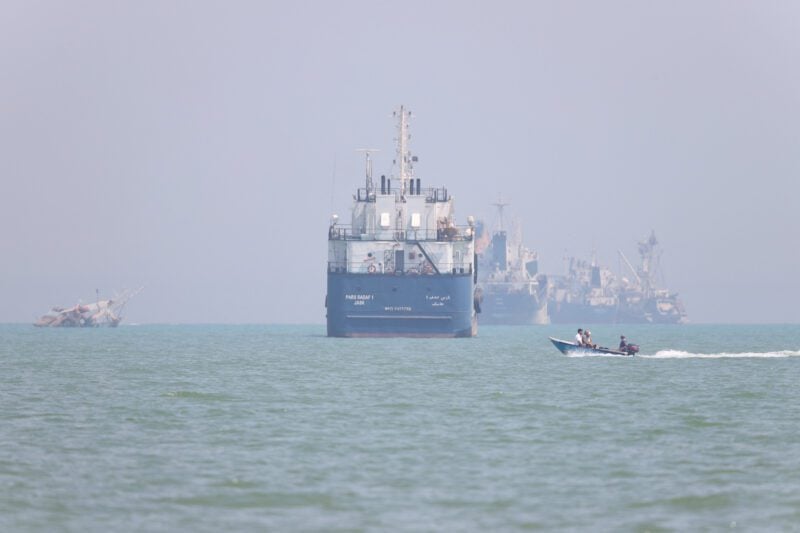
Iran and Oman advance 30–60 day Hormuz corridor framework as impasse with US persists
Iran and Oman advanced a temporary maritime corridor framework this week, with Iranian officials confirming the agreement on 26–27 August. Seven Iraqi tankers loaded crude simultaneously, the first material flow recovery signal in months. Brent crude fell 9 per cent to USD 85, yet VLCC rates to Asia surged to a record USD 647,000 per day as Saudi Arabia executed ship-to-ship crude transfers via Oman and UAE ports.
Sources gCaptain · Maritime Executive
MSC schedules four major east-west services for Suez Canal transit; analyst sees normalisation plausible by year-end
MSC scheduled four major east-west container services for Suez Canal transits on 25–26 August, with analyst Lars Jensen arguing normalisation is increasingly plausible by end-2026. If Red Sea normalises, release of tonnage from Africa loops will suppress box rates and shift transhipment share toward direct Suez routing for Asia-Europe.
Sources The Loadstar · Maritime Executive
US investigates Singapore-based Apex Logistics over suspected role in AI chip smuggling to China
US authorities opened an investigation into Apex Logistics, a Singapore-based subsidiary of Kuehne+Nagel, over suspected involvement in smuggling Nvidia AI chips to China. The timing coincides with Apex's IPO planning. Singapore Deputy PM Gan Kim Yong stated on 28 August that Singapore will not permit logistics hubs to obscure Chinese origin for US tariff evasion.
Sources The Loadstar
Global port congestion hits record 4.3 million TEU stranded as East Asia typhoons compound backlogs
Global port congestion reached a record 4.3 million TEU stranded on 26 August as East Asia typhoons (Bavi, Noul, Dolphin, Narra, incoming Saudel) compounded backlogs. North Asian ports account for half of global delays. Intra-Asia container rates surged 6 per cent week-on-week to USD 1,091 per 40ft as Middle East unrest and China typhoons tightened capacity.
Sources The Loadstar
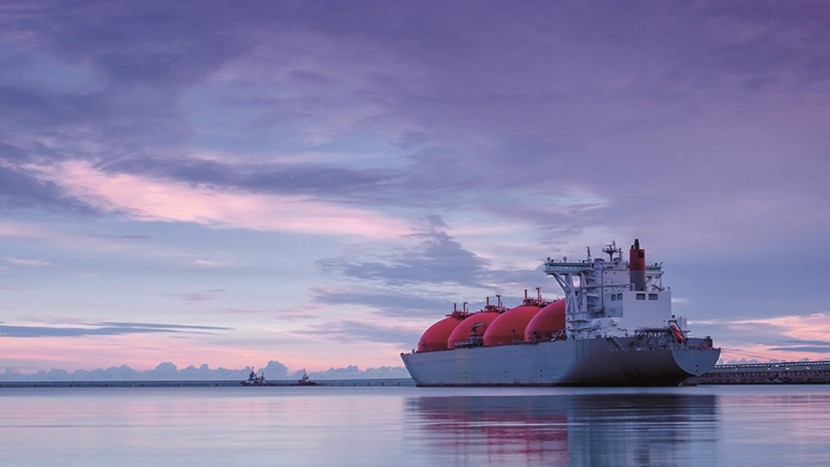
Qatar extends LNG force majeure through November as Hormuz crisis blocks traffic; Asian spot prices hit four-year high
Qatar extended LNG force majeure through November on 29 August, according to OilPrice. Asian spot LNG hit USD 23.39 per MMBtu, a four-year high. Pakistan, Bangladesh and European buyers were notified cancellations continue. Iran-Oman Hormuz corridor negotiations advanced this week but Qatar LNG exports remain trapped behind closure risk.
Sources OilPrice
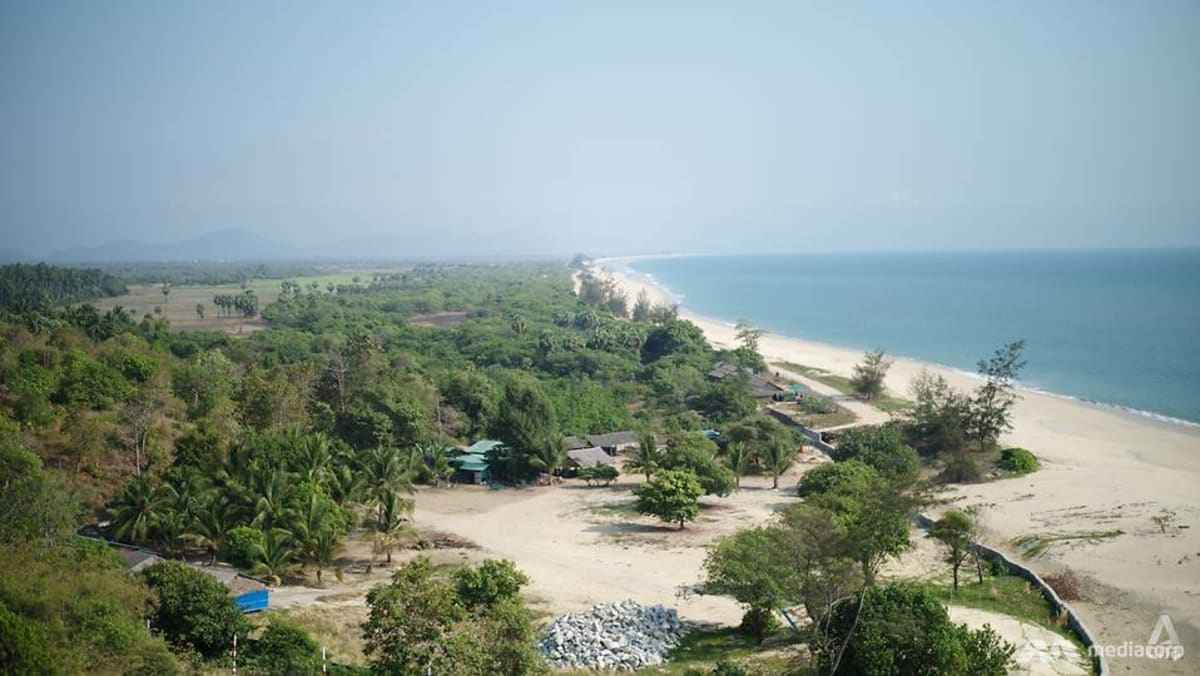
Myanmar revives Russian-backed Dawei megaport as Malacca Strait bypass, viability doubts linger
Myanmar's Dawei Special Economic Zone megaport project, stalled for years, has been revived with Russian backing and renewed Thai interest, explicitly positioned as an Indian Ocean gateway bypassing the Strait of Malacca. Financing and timeline remain opaque, and viability doubts persist due to Myanmar's civil conflict and political instability.
Sources Channel NewsAsia
Catastrophic Nepal-Tibet flash flood kills at least 586, leaves more than 2,400 missing; China suppresses footage and casualty data
At least 586 people died and more than 2,400 remain missing after glacial ice and rock collapse triggered flash flooding at the Gyirong border crossing between Nepal and Tibet. China's state media suppressed CCTV footage and delayed casualty data, the BBC and Taipei Times reported. The Shigatse smart port, a multibillion-yuan Belt and Road gateway, is under climate-resilience scrutiny.
Sources Channel NewsAsia · BBC · South China Morning Post

Indonesia wildfire crisis escalates to 3 million exposed across seven provinces; West Kalimantan worst in 15 years, haze forecast for Singapore
Indonesia's wildfire crisis escalated to 3 million people exposed across seven provinces by 28 August, with West Kalimantan schools closed and clinics overwhelmed in what officials described as the worst conditions in 15 years. Haze was forecast to reach Singapore within 48–72 hours. NASA FIRMS data recorded 14,030 active-fire hotspots over Sumatra and Kalimantan in the preceding 48 hours, 1.9 times baseline.
Sources Al Jazeera · Antara
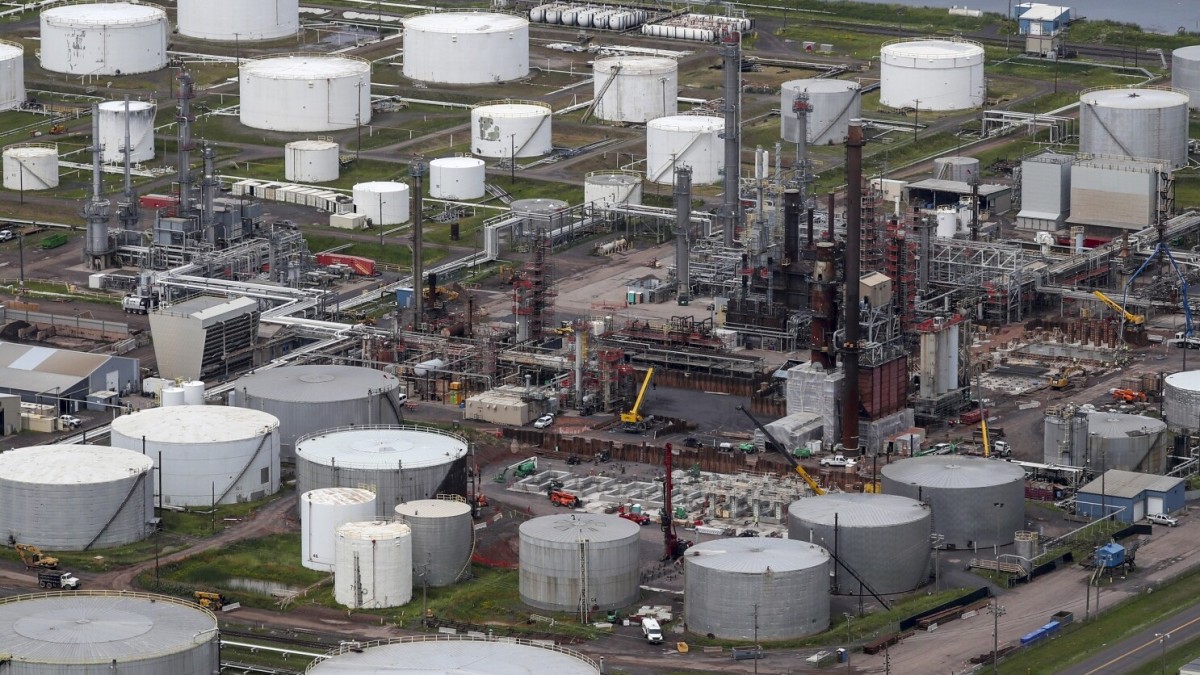
US refiners face new crude squeeze as Canada cuts oil sands output 300,000 bpd in September; SPR near operational floor
Canadian oil sands maintenance will cut 300,000 barrels per day in September. US crude storage reached a 12-month low, with the Strategic Petroleum Reserve at 289.7 million barrels—only 40–90 million above the operational minimum. OilPrice reported that global refining capacity is down significantly, diesel stocks are depleting, and European diesel is 70 per cent above pre-conflict baseline.
Sources OilPrice
Ask the briefs
Plain-English answers to the questions a reader is most likely to ask this week, drawn from the briefs and the analysis behind them. Tap a question, or type your own.
Presentation 2.2 (2026-08-30)